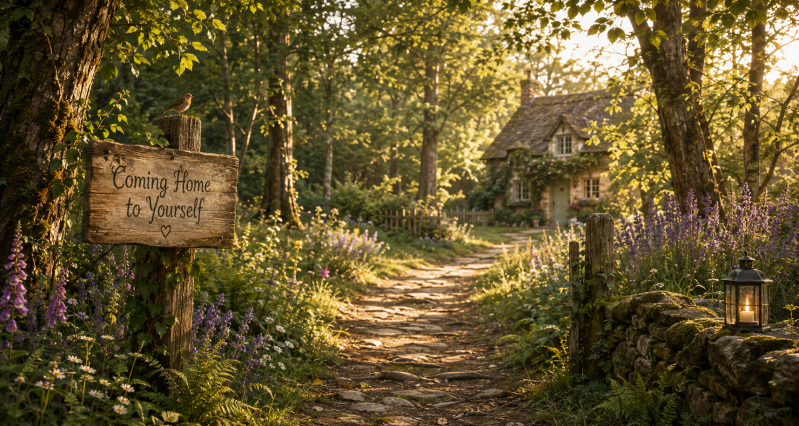
Coming Home to Yourself
Our fully supported programme is a deeply nurturing, in-person journey for neurodivergent women who grew up feeling shamed, criticised, scapegoated, emotionally unseen or never quite good enough.
Through gentle teaching, guided reflection, shared understanding and carefully created therapeutic exercises, you will begin to loosen the grip of old messages and build a safer, kinder relationship with yourself.
You do not need to become a better version of yourself to belong here. You are invited to come exactly as you are.

When Home Never Felt Like Home
Our earliest relationships help to shape what we believe about ourselves, what we expect from others and whether the world feels safe.
When childhood was marked by criticism, emotional absence, family scapegoating, unpredictability or shame, those experiences can follow us far beyond the home in which they began. We may learn to hide parts of ourselves, work relentlessly for approval or assume that every difficulty proves we were the problem all along.
For neurodivergent women, years of being misunderstood can deepen these wounds. Many of us reach adulthood without ever having experienced the steady acceptance we needed.
But the story does not have to end there.
Coming Home to Yourself offers a gentle path towards understanding what happened, loosening the hold of old messages and creating an inner home built upon compassion, safety and self-trust.

Is This Programme for You?
Coming Home to Yourself may feel like the right place for you if you:
- Grew up feeling criticised, scapegoated or emotionally unseen
- Learned that love, approval or safety had to be earned
- Still hear an old, critical voice when you make mistakes
- Find rejection, disapproval or conflict especially painful
- Hide your needs, over-explain yourself or work too hard to keep others happy
- Have spent years wondering whether you were simply “too much” or “not enough”
- Long to trust yourself, set healthier boundaries and feel more at home in your own life
You do not need to have a perfect understanding of your family history. You do not need a formal trauma diagnosis, and you do not need to arrive feeling confident or ready.
You only need a sense that something in you deserves to be met differently.
What the Journey Holds
Across sixteen weekly sessions, we will gently explore the experiences and beliefs that shaped the way you learned to see yourself.
The programme brings together:
- Warm, accessible teaching created with neurodivergent brains in mind
- Guided reflections and gentle therapeutic exercises
- Carefully written meditations rooted in our woodland journey
- Opportunities to share and be witnessed without pressure
- Practical tools for difficult days, boundary setting and emotional overwhelm
- Two beautifully illustrated workbooks to support your journey
- Space to recognise your unique strengths and begin trusting your own voice
There will be invitations, never demands. You will not be expected to disclose painful experiences, perform vulnerability or keep pace with anybody else.
This is not a journey towards becoming someone new. It is a supported return to the self who was there all along.

Your Sixteen-Week Journey
The programme follows a carefully created path through the woodland and towards the cottage — a place of safety, belonging and return.
Each week builds gently upon the one before it. We begin by creating safety and understanding, move towards meeting old wounds with compassion, develop practical ways of supporting ourselves and finish by carrying that growing sense of home into the world.
The route is structured, but your experience does not have to be linear. There is no “correct” pace of healing and no expectation that every week will feel the same.

Part One: Entering the Woodland
Weeks 1–4 · Safety, Recognition and Being Seen
Week One — The Woodland Path
We begin gently: meeting one another, acknowledging the bravery it takes to arrive and creating a space in which nobody has to prove that she belongs or attempt to "fit in" by repressing or hiding parts of herself.
Week Two — The Cottage Door
We explore emotional safety, what helps us feel able to soften and how our nervous systems learned to protect us. We thank the survival mechanisms that previously served a purpose... and look towards healthier approaches.
Week Three — Meeting the Inner Mother
We begin developing the compassionate inner presence that may have been missing — one capable of meeting us with curiosity rather than criticism, and with warmth rather than indifference.
Week Four — Being Truly Seen
We consider what it means to be witnessed without judgement, performance or correction... and practise recognising ourselves through kinder eyes. We support our reluctant and fearful parts, enabling our voices to be heard.

Part Two: Resting at the Cottage
Weeks 5–8 · Receiving, Acceptance and New Possibilities
Week Five — Receiving What Was Missing
We explore the emotional nourishment we needed, acknowledge the ache of what was absent and practise allowing care to reach us now. We notice the resistance which may internally arise, and manage it safely... with compassion and warmth.
Week Six — Unconditional Acceptance
We gently challenge the belief that love and belonging must be earned, making room for the possibility that our worth was never dependent upon performance.
Week Seven — Cycle Breaking
We consider how old patterns travel through families and discover that cycle breaking is not about perfection, but awareness, choice and compassionate repair.
Week Eight — Helpful and Unhelpful Beliefs
We begin identifying the old messages we have carried, questioning whether they were ever truly ours and creating kinder beliefs that support the lives we want to build.

Part Three: Creating the Calm Home Within
Weeks 9–12 · Comfort, Boundaries and Inner Safety
Week Nine — The Extra Tough Days
We prepare for the days when everything feels harder, creating a deeply practical collection of reminders, comforts and supports — with plenty of room for fireside "cocoa and slippers" to nurture us.
Week Ten — Boundaries and True North
We explore boundaries as acts of care rather than rejection; reconnecting with our core values and learning to hear the quiet inner compass when met with other people’s expectations.
Week Eleven — Returning to the Present
We practise gentle, neurodivergent-friendly ways of returning to the here and now, without turning mindfulness into another task we are somehow expected to perform perfectly.
Week Twelve — The Cottage Rooms
We explore the different parts of our inner home, recognising what each room holds and strengthening the sense that safety, belonging and compassionate care can begin to live within us.

Part Four: Carrying Your Nourishing Home Inside
Weeks 13–16 · Resilience, Courage and Moving Forward
Week Thirteen — When the Old Voice Returns
We meet self-sabotaging tendencies and the returning critical voice with understanding; recognising that an old pattern reappearing does not mean we have failed or slipped backwards.
Week Fourteen — Remembering Your Strength
At the river, we reflect upon the resourcefulness that has carried us this far, reconnecting with our inner strength and choosing the direction that feels true... in alignment with our own cherished values.
Week Fifteen — Walking with Courage
We prepare to move beyond the familiar woodland path; not without fear or uncertainty, but with a growing ability to walk beside ourselves with trust, open-heartedness and compassion.
Week Sixteen — Coming Home
We gather to honour the journey, recognise what has changed and celebrate the truth at the heart of the programme... home is no longer somewhere we must earn our way into. It is a place we are learning to carry within.
Could This Be Your Pathway Home?
You do not need to feel completely ready, and you do not need to make a firm commitment today.
If something within these pages has felt familiar, you are warmly invited to register your interest, ask a question or arrange a gentle introductory conversation.
There will be no pressure to disclose more than feels comfortable and no expectation that you should already know whether the programme is right for you.
Sometimes the next step is simply allowing yourself to wonder:
What might become possible if I no longer had to find my way alone?
Create Your Own Website With Webador